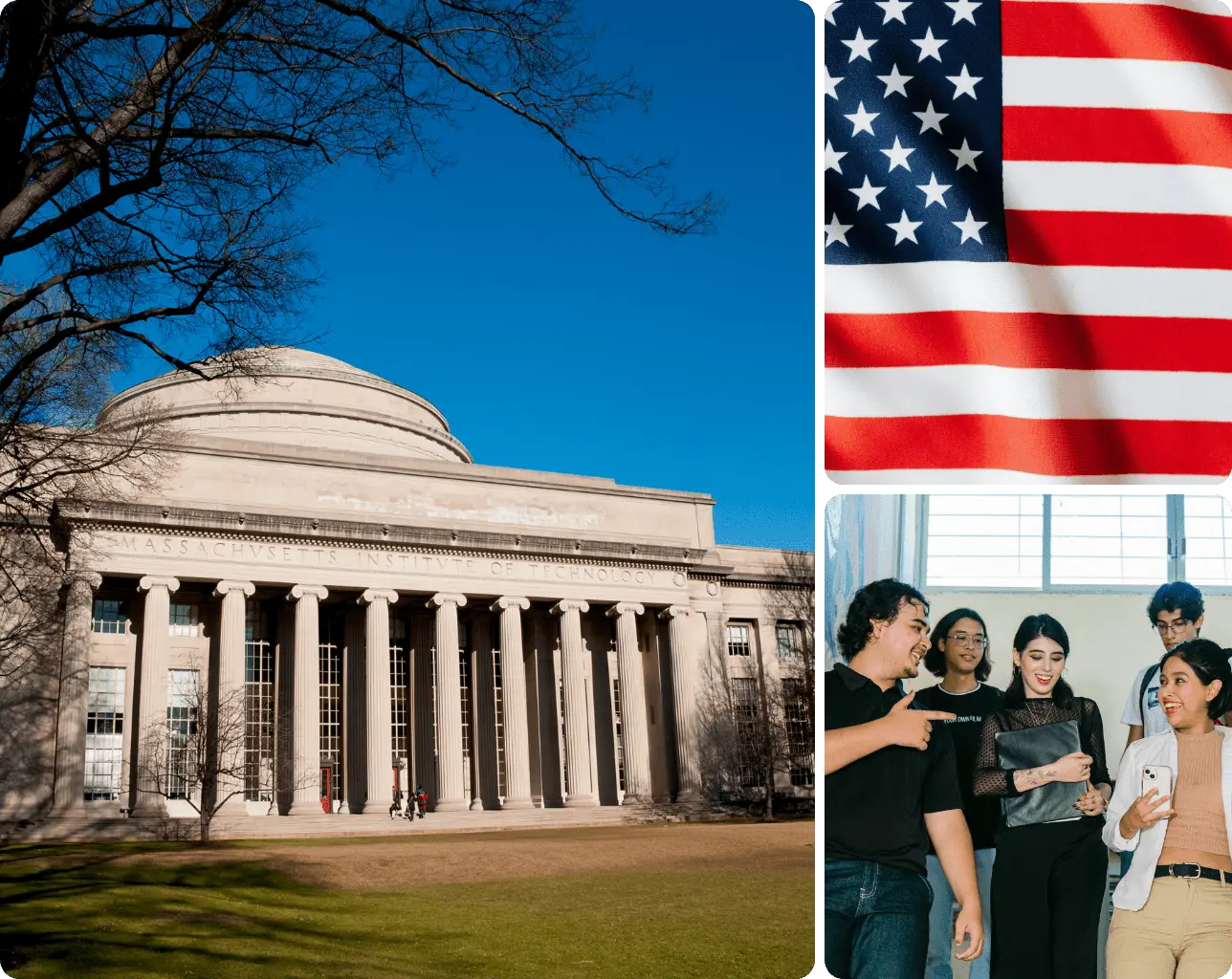

ISEC Slider: Thinking about universities in the United States? Built-in text featuring the Statue of Liberty against a blue sky
 

A globally respected study destination offering flexible learning, world-class universities, strong career exposure, and a vibrant campus lifestyle in a multicultural environment.


Book Free Counselling >
 

Why Study in the United States?

The US is ideal for students who want flexibility and scale. From choosing majors to accessing research, labs, and internships, it gives you room to explore before locking into a career path.

Degrees That Carry Global Value 
A US degree is respected worldwide. Whether you want to work internationally, return to India with stronger opportunities, or continue higher studies, a US qualification adds long-term value to your profile.

Flexible Courses That Match Your Interests 
One of the biggest advantages is flexibility. You can explore subjects through electives, choose a major that fits your goals, and in many cases shift your academic direction without starting from zero.

Research, Labs, and Practical Learning 
Many US universities focus on hands-on learning. You’ll find modern labs, research opportunities, real projects, and learning that connects directly with industry needs, especially in technology, business, engineering, healthcare, and sciences.


Internships and Career Support 
Internships are a big part of the US student journey. Universities often support students through career centres, resume guidance, networking events, and employer connections, helping you build work experience alongside your studies.

Campus Life That Feels Like a Community 
Student life in the US is active and diverse. Clubs, sports, student groups, events, and international student services make it easier to settle in, meet people, and feel supported from day one.

A Multicultural, Global Environment 
You’ll study with students from all over the world. This improves your communication, confidence, and global exposure, which matters just as much as academics in today’s job market.

With the right plan, the whole journey becomes smoother. The right guidance helps you shortlist universities, choose the best-fit course, and move ahead with confidence and clear expectations.

Why Study in the United States?

The US is ideal for students who want flexibility and scale. From choosing majors to accessing research, labs, and internships, it gives you room to explore before locking into a career path.

Degrees That Carry Global Value 
A US degree is respected worldwide. Whether you want to work internationally, return to India with stronger opportunities, or continue higher studies, a US qualification adds long-term value to your profile.

Flexible Courses That Match Your Interests 
One of the biggest advantages is flexibility. You can explore subjects through electives, choose a major that fits your goals, and in many cases shift your academic direction without starting from zero.

Research, Labs, and Practical Learning 
Many US universities focus on hands-on learning. You’ll find modern labs, research opportunities, real projects, and learning that connects directly with industry needs, especially in technology, business, engineering, healthcare, and sciences.

Internships and Career Support 
Internships are a big part of the US student journey. Universities often support students through career centres, resume guidance, networking events, and employer connections, helping you build work experience alongside your studies.

Campus Life That Feels Like a Community 
Student life in the US is active and diverse. Clubs, sports, student groups, events, and international student services make it easier to settle in, meet people, and feel supported from day one.

A Multicultural, Global Environment 
You’ll study with students from all over the world. This improves your communication, confidence, and global exposure, which matters just as much as academics in today’s job market.

With the right plan, the whole journey becomes smoother. The right guidance helps you shortlist universities, choose the best-fit course, and move ahead with confidence and clear expectations.

Where to study in United States?

Popular Courses in the United States

The US offers programs that match global career demand across tech, business, healthcare, engineering, arts, and many other fields. Students can choose courses based on their interests and long-term career goals.

  • Computer & Data Science
  • Data & Business Analytics
  • Investment Banking & Finance
  • Pharmaceutical Sciences
  • Engineering & Construction

Careers & Industry Insights

The United States remains the top destination for international students worldwide, offering unmatched opportunities across virtually every industry. The country has the world's largest economy with leading sectors in technology, healthcare, finance, engineering, and entertainment. Here's what makes it special: the US offers some of the highest salaries globally, cutting-edge innovation, diverse career paths, and direct access to industry giants like Google, Apple, Microsoft, and countless Fortune 500 companies.

When we're guiding our students, we focus on sectors that are actually hiring. Right now, Technology & Software, Healthcare & Biotechnology, Financial Services, Engineering, Data Science & AI, and Business Management are booming. These aren't small niches. They're massive employers actively seeking international talent. We've seen our Indian students thrive in these fields. Your educational background combined with America's innovation-driven economy creates incredible opportunities for career growth and professional development.

Study in USA FAQs

Why is the USA a popular destination for international students?
The USA offers diverse academic programs, flexible education pathways, globally recognised universities, and advanced research facilities.
What exams are required to study in the USA?
Undergraduate students may need to take the SAT or ACT, along with an English language proficiency test. For postgraduate students, GRE or GMAT scores may be required, depending on the university and program, in addition to English language requirements. Widely accepted English language tests include TOEFL, IELTS, and PTE.
How does the admission process work for US universities?
The admission process includes shortlisting universities, submitting applications, SOPs, academic documents, recommendation letters, and test scores.
How long are courses in the USA?
Bachelor’s degrees usually take 4 years, while Master’s programs typically range from 1.5 to 2 years, depending on the curriculum and credit studying.
What are the most popular study themes in the USA?
The USA is widely preferred for technology-driven programs, research-based education, computer science, data science, engineering, artificial intelligence, and business analytics, with strong emphasis on innovation and practical exposure.
How long does a post-study work visa last in USA?
The United States offers Optional Practical Training (OPT) for up to 12 months of work authorisation after graduation. Some STEM OPT in certain Science/Tech/Engineering/Math fields can extend by 24 more months, for a total of up to 36 months (3 years).

Not sure which country
or course fits you best?


Book A Free Counselling Session Today >

Not sure which country
or course fits you best?


Book A Free Counselling Session Today >

What our students say

Beyond The Study

How much does it cost to study in the USA for Indian students?

Tuition fees in the USA vary widely, ranging from USD 15,000 to USD 55,000 per year, depending on the university type (public vs private) and programme. Living costs range from USD 10,000 to USD 18,000 annually. ISEC helps students identify affordable options, scholarships, and education loan support.

What exams are required to study in the USA?

Most US universities require TOEFL or IELTS for English proficiency. For postgraduate admissions, the GRE is commonly required for MS programmes and the GMAT for MBA programmes. ISEC guides students on specific test requirements for their chosen universities and courses.

What is OPT, and how does it work?

Optional Practical Training (OPT) allows international students on an F-1 visa to work in the USA for up to 12 months after graduation. STEM degree holders can extend OPT for an additional 24 months, giving them up to 3 years of work experience. ISEC explains post-study work options during the counselling process.

Can I work part-time while studying in the USA?

Yes, F-1 visa students can work on-campus for up to 20 hours per week during the academic term and full-time during breaks. Off-campus work options like CPT (Curricular Practical Training) are also available with university approval. ISEC provides complete guidance on student work regulations in the USA.

How do I choose the right university in the USA?

Choosing the right university depends on your field of study, budget, location preference, campus culture, and career goals. With thousands of universities in the USA, it can be overwhelming. ISEC’s counsellors help you shortlist universities based on your academic profile, interests, and long-term plans through a personalised counselling session.

Book Free Counselling >

    Book Free Study Abroad Counselling

    ISEC uses the contact information you provide to help schedule your free counselling session. You may unsubscribe anytime. Please refer to our privacy policy for information on how to unsubscribe.